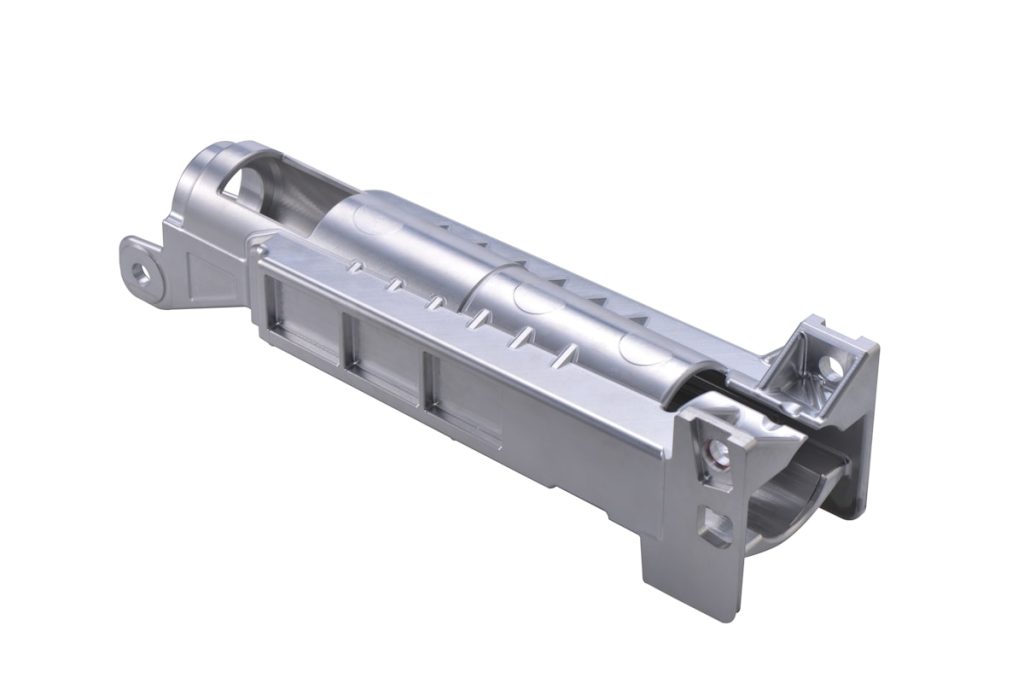
Consider stiffness during machining
A thin wall can deflect under cutting forces even when the finished component is sufficiently stiff in its assembly. Unsupported height, surrounding ribs and the location of pockets influence how the part behaves while material is removed.
Review tool access and geometry together
Deep pockets and narrow gaps can require longer tools, which also affect stiffness and access. Internal corners follow the geometry of the cutting tool. Reviewing pocket depth, corner radii and the surrounding wall as a group can reveal simpler manufacturing choices.
Choose datums that support inspection
Identify stable surfaces for locating and measuring the part. Explain whether a dimension is intended to be checked in a free state or in an assembly fixture. A clear drawing can prevent disagreements about how a flexible feature should be assessed.
Discuss trade-offs early
Before freezing the design, share the functional envelope and any areas where ribs, radii or wall changes are possible. The objective is to balance weight, assembly function and a practical machining route. Numerical limits should be agreed for the actual material and geometry.
Further reading: Protolabs Network: designing parts for CNC machining.